News · 1 October 2026
Storage decides if an element gets a second life.
This is what losing it looks like.
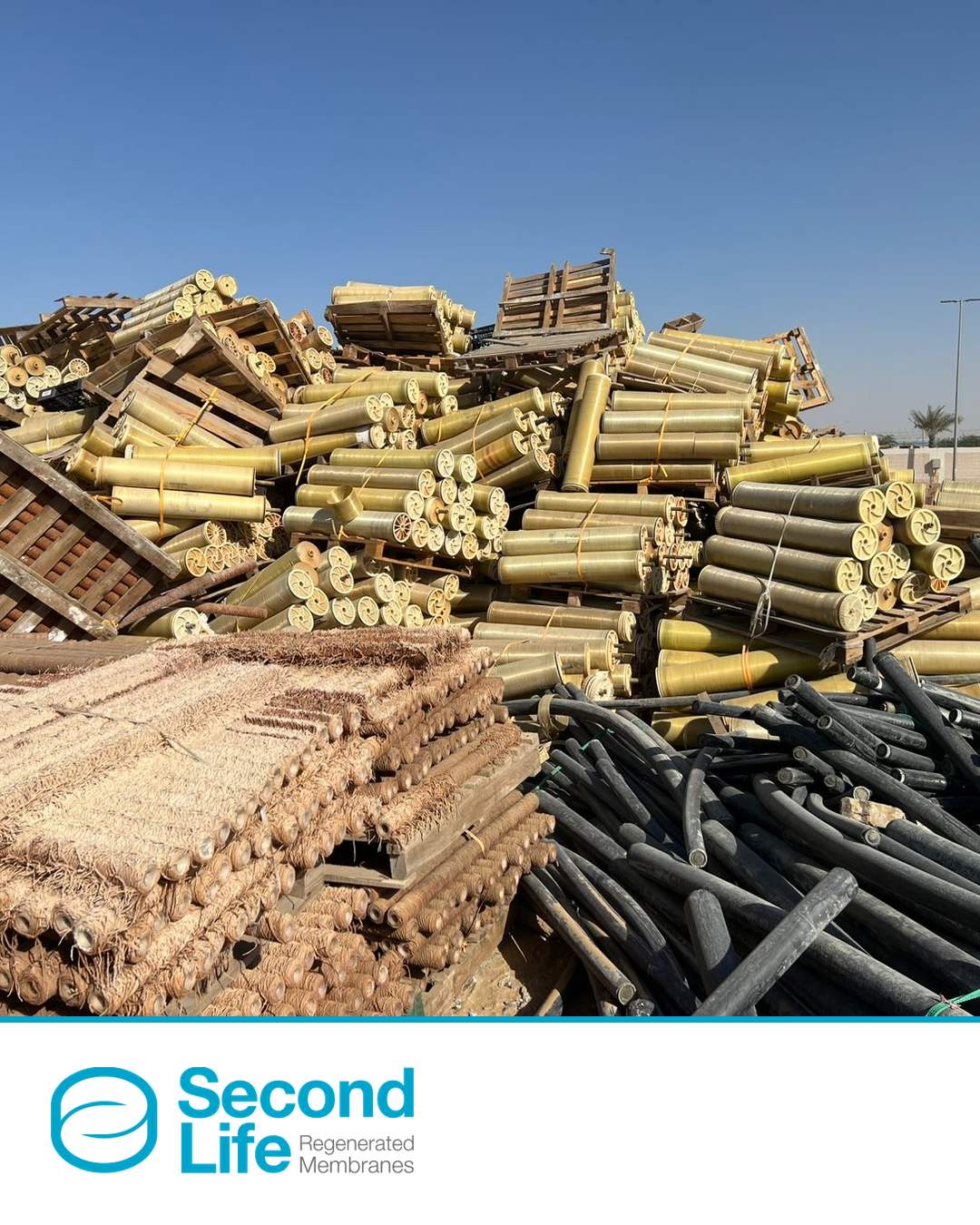
These are spent seawater RO elements at the end of their first life.
They're stacked in the open, between old pallets, spent cartridge filters and black hose.
Out here, they dry out.
The sun, the sand and the dust storms damage what's left.
There's no fixed time an element survives like this.
It doesn't matter, because storing them this way is wrong from day 1.
A pile like this comes from how seawater plants work.
They run thousands of elements and replace them in big batches.
Then the batch waits for a decision, out in the open.
At our plant, every element gets 6 checks by hand before anything else.
A single failed check ends it.
The ones that pass go through our own regeneration process, then a performance test of their own.
The ones that fail, at the checks or at the test, go to our Zero Waste to Energy project.
They become refuse-derived fuel, so the plastic still stays out of landfill.
That's about 15 kg for every element we take in.
If you want value from a spent element, treat it as an asset from the day it comes out of the vessel.
Store it covered, and don't let it dry out.
First posted on our LinkedIn page.