News · 26 October 2026
What worked in the lab didn't hold in the plant.
And a process you can't repeat is a price you can't hold.
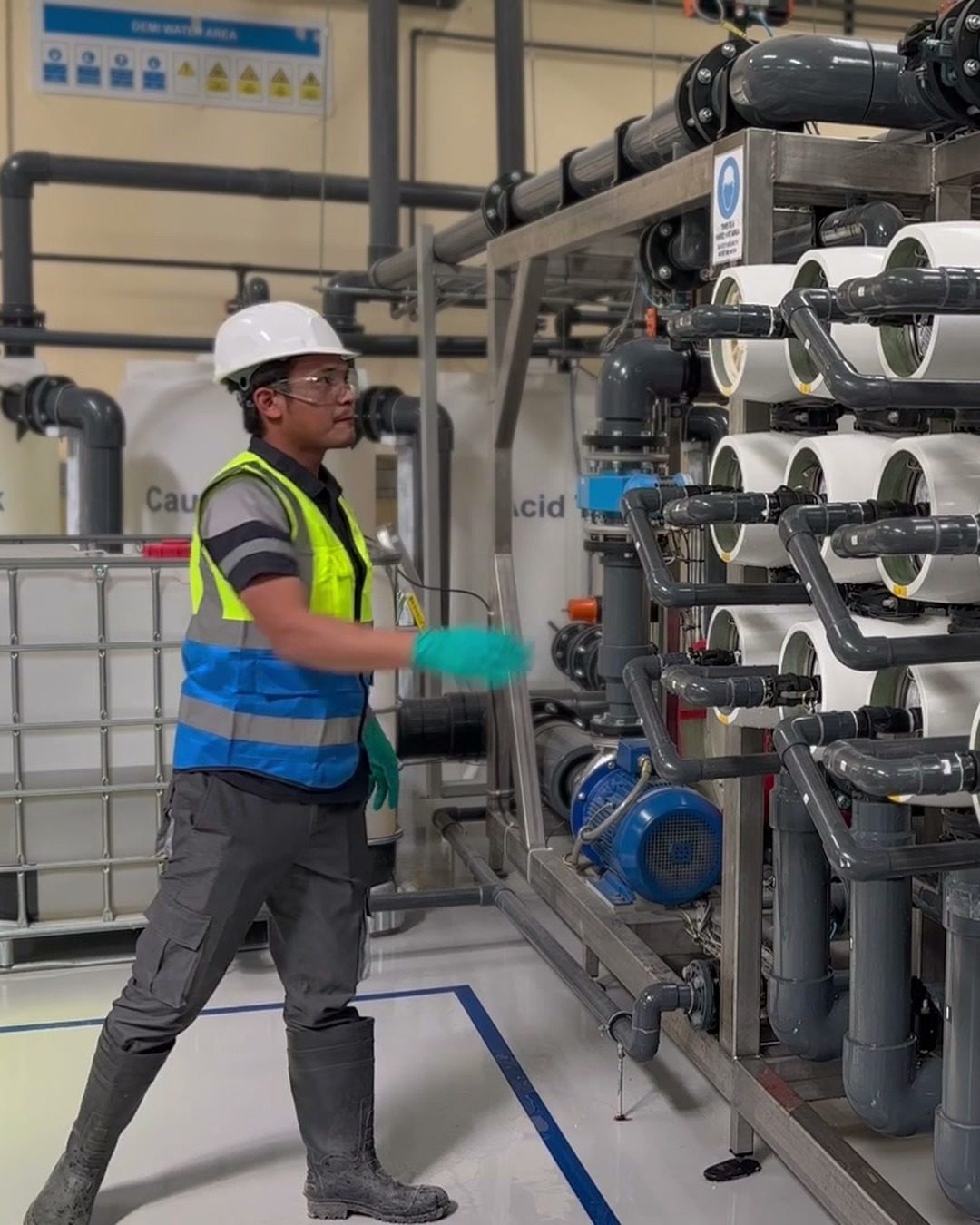
Regenerating elements on a lab bench is 1 job.
Doing it a full rack at a time, in our 2ndLifeRevive plant in Ras Al Khaimah, is another.
Early on, a batch came out as a random mix of grades.
That told us the process wasn't under control yet.
So we learned to regulate it on the industrial plant itself.
Then we changed 1 thing, and the results we expected started to appear.
Today our own regeneration process runs to a recipe.
It trades some of a seawater element's very high rejection for flow, the same way every time.
That's how we make our 3 grades on demand: High Flow, High Rejection and Super High Rejection.
Every element is still tested on its own, to ISO 20466.
Its own flow and rejection decide its grade.
Why should a plant buyer care how we got there?
Because a cheaper element is only worth it if the next one behaves like the last.
Ours cost 30 to 50% less than new.
They deliver 85 to 90% of new rejection and flow.
If your duty needs the last 10 to 15% of seawater rejection, buy new.
What would your next change-out cost with regenerated elements?
Run your own numbers: 2ndlifero.com/changeout
First posted on our LinkedIn page.